
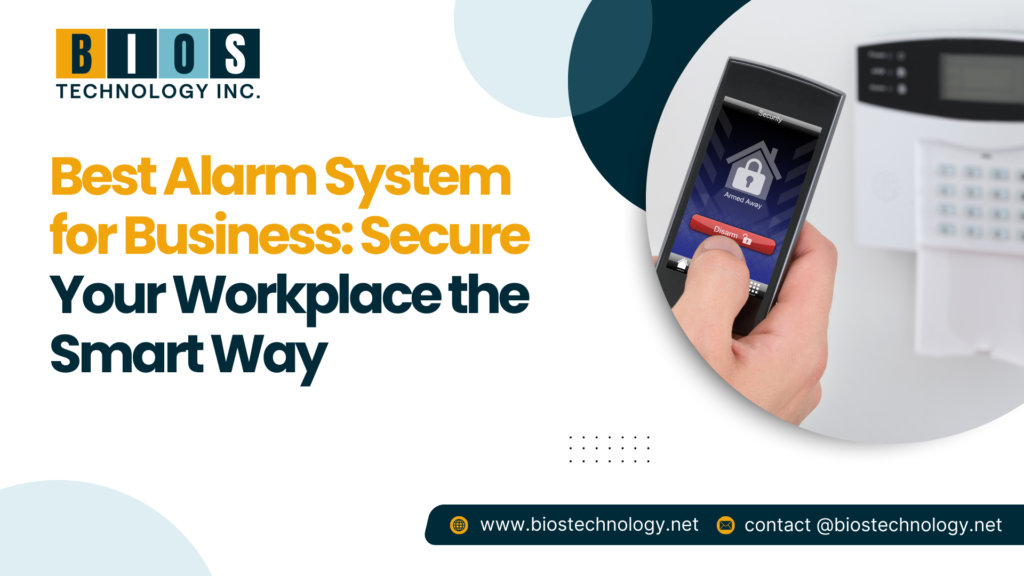
The security of a business facility is key to a safe workplace, the protection of company assets, and a smooth operational workflow. Corporate alarm systems protect company assets and provide peace of mind to owners, and also help reduce company expenses associated with theft and vandalism. This blog covers some of the most widely used types of alarm systems, their desired features, and some business-specific methods to determine the most appropriate alarm system.
The Importance of A Business Alarm System
Alarm systems do not simply consist of a loud siren that is activated. Alarm systems are a key aspect of workplace security and safety in the following ways:
- Protect the safety of employees and patrons.
- Preserve electronic and physical business assets.
- Reduce financial losses due to theft and vandalism.
- Also assist with the business’s insurance and compliance requirements.
- Enhance the goodwill of the business in the community due to its security commitment.
Defining the types of Alarm systems
The first step in buying a security system is understanding the types of alarm systems that are available, and many companies find that more than one type of system is most beneficial for them in achieving the safety and security goals they need.
Burglar and Intruder Alarm Systems
These systems are designed to alert companies of unauthorized entry by door, window, or motion-based detection in restricted areas. These systems have basic components that consist of door and window contacts, motion detectors, and a control center that triggers the alert.
Fire Alarm and Smoke Detectors
Fire protective systems that are not integrated with a building’s sprinkler system and local fire department are designed to sense smoke, heat, or elevated levels of deadly carbon monoxide. These integrated systems minimize the damage that a fire will create, along with the loss of life that the fire will claim.
Outside and Internal Access Control Systems
Access control systems dictate who gets inside specific secure areas. They use key cards, PIN codes, and biometric readers. Door alarms notify personnel immediately if entry points are protected are forced open, or are propped open.
Video Surveillance
CCTV cameras give visual and real-time records. With alarms and access control, there is an integrated security system that provides real-time incident verification and a responsive integrated system for immediate incident management.
What to Consider
When considering alarm systems for a business, the following are the most significant.
Detection
- Sensors for doors and windows, as well as motion and glass-break sensors, need to be of high quality.
- Reduction of false alarms is an important consideration when looking for alarm systems. Look for sensors that have tamper-resistant features and smart filtering systems.
Monitoring and Response
- Seek units that are connected to a professional monitoring system for 24/7 accountability.
- Emergency response protocol is important in the review of alarm systems. Does the alarm generate a response from the police or appropriate response organizations, or from in-house personnel, or via pre-assigned personnel contacts?
Systemization and Technology
- Combined systems are easier to manage. Look for systems that have integrated or unified cameras, access control, and building systems.
- It is critical that the alarm systems notify appropriate personnel promptly.
Adaptability and Customization
- The system installation should be designed to grow with your business. Look for systems where the sensors, cameras, or access control points can be added without requiring the installation of an entirely new system.
- Custom alarm zone and user permission customization can help meet your operational requirements.
User Access and Audit Trail
- User Access Management: User Management allows simple granting and revocation of access for employees and contractors, and users.
- Audit Trail Capability: Routine logs and reports of incidents help with audits and filing insurance claims.
Service and Installation
The effectiveness of a business alarm system depends on a streamlined process of correct installation and consistent maintenance. Qualified installation of sensors, wiring, and communication devices is a guarantee for proper coordination of system installation and optimal functionality. Alarms and sensors should be regularly tested to ensure effectiveness and instantaneous reaction. System management software and firmware should be updated regularly to preserve system security. Thorough system documentation, including system settings, service intervals, and incidents, offers a solid foundation for future system maintenance, upgrades, and incident resolution.
Selecting the Best Provider
An experienced provider is the best way to reduce risk and enhance operational efficiency. Take the following into consideration:
- Experience and Reputation: Identify providers that have successfully worked with businesses in your market.
- Service Range: Opt for providers who can do installation, monitoring, maintenance, and offer timely assistance.
- Knowledge of Compliance: Confirm that the provider is familiar with regional safety standards and requirements of the industry.
- Contracts: Pay attention to service level agreements with regard to response time, hours of support, and how contracts can be terminated.
- Proximity to Staff: Companies with local staff have quicker access to on-site assistance when necessary.
Cost Considerations
The size of the office and the intricacies of the system determine the cost of the system. The price is affected by the necessary hardware, installation, and support. Companies must factor in system maintenance and technical support to keep the system functioning correctly. Also, increased priced features such as analytics and access management can be worth the cost. Spending more money on a system that offers quality features is risk-reducing and can aid in preventing future financial losses.
Final Thoughts
Bios Technology supplies fully integrated security systems, including all necessary components. These include monitoring services and installation. Bios Technology offers clients the ability to customize their security measures by adding security cameras, access control systems, and intrusion detection systems. With reliability in all service components, Bios Technology supports clients in meeting their security requirements. Bios Technology can be the right choice for companies that need specialized support for their security systems and want to be their partner to provide security services as well.
Contact details: +1 840-699-6568
